An SME IPO is how a small company, often far smaller than even a “small-cap” stock, raises public money by listing on a dedicated exchange platform built for emerging businesses (NSE Emerge or BSE SME), rather than the mainboard where large companies like Reliance or TCS trade.
If you have only ever looked at mainboard IPOs, the SME segment can feel like a different world: bigger ticket sizes, thinner disclosures, higher risk, and, historically, some spectacular listing gains alongside some equally spectacular disasters. This guide explains exactly what an SME IPO is, how the platform works, and what changed in 2025 that every investor now needs to know before applying.
This is the pillar guide. Once you understand the fundamentals here, move to our deeper pages on how SME IPOs differ from mainboard, how to apply step-by-step, and the real risks of SME investing.
The Simple Definition
An SME IPO (Small and Medium Enterprise Initial Public Offering) is the process by which a smaller company sells its shares to the public for the first time and gets listed on a specialised exchange platform designed for companies below a certain size.
India has two such platforms:
- NSE Emerge– run by the National Stock Exchange
- BSE SME– run by BSE (formerly the Bombay Stock Exchange)

A company that lists on one platform only, it cannot list on both simultaneously at the IPO stage. Both operate under the overall framework set by SEBI (the Securities and Exchange Board of India), but with lighter, faster requirements than the mainboard, so that genuinely small businesses can access public capital without the enormous cost and compliance burden of a mainboard listing.
Think of it this way: the mainboard is for large, established companies. The SME platform is a regulated on-ramp for smaller companies, often with three to ten years of history and a few hundred crore (or much less) in revenue, to raise growth capital and build a public track record.
Why Do Companies Choose the SME Route?
A company opts for an SME listing rather than the mainboard for several practical reasons:
- Lower eligibility bar. Mainboard listings demand a large paid-up capital, extensive profitability history, and heavy compliance. Many good small businesses simply cannot meet those thresholds yet.
- Faster, cheaper process. SME prospectuses are reviewed by the exchange rather than going through SEBI’s full mainboard vetting, which shortens timelines.
- Access to growth capital without debt. Listing lets a company raise equity to fund expansion instead of piling on loans.
- A public valuation and visibility. Being listed gives the business a market-determined valuation, greater credibility with lenders and customers, and an eventual path to migrate to the mainboard as it grows.
For the company, it is a genuine growth tool. For the investor, it is a higher-risk, higher-potential-reward corner of the market, which is exactly why understanding the rules matters.
Who Is Eligible to List? (The Company’s Side)
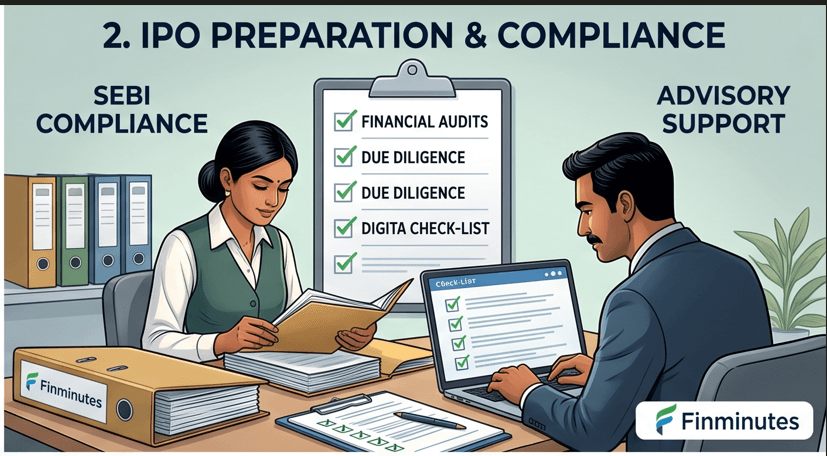
Not every small company can list on the SME platform. Under SEBI’s ICDR Regulations (Chapter IX), a company must broadly satisfy:
- Post-issue paid-up capital of not more than ₹25 crore. Companies above this must go to the mainboard. (Companies up to ₹10 crore list straightforwardly; those between ₹10 crore and ₹25 crore may also use the SME route subject to conditions.)
- A track record of at least three years of operations, with audited financial statements for the last three financial years.
- A minimum net worth (the exchanges apply their own financial thresholds).
- Compliance with the exchange’s specific listing standards.
Importantly, a company does not have to be profitable to list on the SME platform, but it must have audited financials that investors and the exchange can evaluate. This is one reason due diligence matters so much: an SME IPO can include loss-making or early-stage businesses.
The Single Most Important Thing to Know: The 2025 Rule Change
If you take away only one fact from this page, make it this one.
From 1 July 2025, the minimum application size for an SME IPO is above ₹2 lakh, and you must apply for a minimum of two lots. This applies across all investor categories.
Before this change, retail investors could participate with a minimum of around ₹1 lakh. The old “Retail Individual Investor” category has now been replaced with a broader “Individual Investor” category, defined as someone applying for at least two lots with an application value exceeding ₹2 lakh.
In practice, applying for an SME IPO today typically requires ₹2–3 lakh, depending on the price band and lot size.
Two other bidding changes arrived at the same time:
- Cut-off price bidding is no longer available for any category in SME IPOs. You bid at a specific price.
- Downward modification and cancellation of bids is no longer permitted.
Why did SEBI and the exchanges do this?
The stated goal was to filter out speculative short-term investors who were chasing listing-day gains without reading the financials. By raising the minimum ticket to above ₹2 lakh, the regulator ensured that participants have meaningful capital at stake and are more likely to be serious, research-driven investors.
The trade-off is honest and worth stating plainly: the SME segment is now less accessible to smaller retail investors. That is a deliberate design choice, not an accident.
A Crucial Distinction: Who Vets the Prospectus?
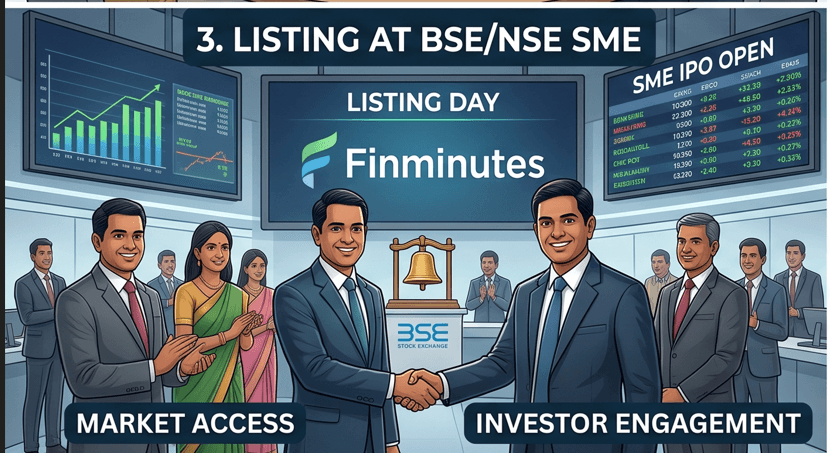
Here is a difference that most investors never learn, and it changes how carefully you should read an SME IPO.
For a mainboard IPO, the draft prospectus (DRHP) is vetted directly by SEBI.
For an SME IPO, the draft prospectus is primarily vetted by the exchange itself (NSE or BSE), not SEBI directly.
This places a higher burden of due diligence squarely on you, the investor. The regulatory safety net is lighter. Nobody is reading the fine print on your behalf to the same degree. This is precisely why, at FinMinutes, our forensic approach to SME filings is even more rigorous than for mainboard IPOs, because in this segment, the risks that hide in the footnotes are the ones most likely to go unexamined.
Built-In Investor Protections You Should Know
The SME framework does include safeguards. Understanding them helps you gauge risk:
- Promoter contribution and lock-in. Promoters must contribute at least 20% of the post-issue capital, locked in for at least three years after allotment. A long lock-in aligns promoters with public shareholders for a while.
- Mandatory market making. A market maker must provide continuous buy and sell quotes for at least three years after listing, to maintain some baseline liquidity. (As we explain in our risks guide, this is both a protection and a dependency.)
- Minimum public shareholding. Companies must maintain at least 25% public shareholding post-listing.
- Public comment window. The DRHP is open for public comments for 21 days.
- Full underwriting. The issue must be fully underwritten, with the merchant banker underwriting at least 15%.
These rules make the segment more robust than it was a decade ago, but they do not remove the fundamental risks of investing in small, less-liquid companies.
SME IPOs by the Numbers
The segment has grown dramatically. In 2024, over 240 companies were listed across NSE Emerge and BSE SME, a record year. Historically, a large share of SME IPOs have delivered positive listing-day gains, which is exactly what drew speculative money and prompted the 2025 tightening.
But a critical caveat, stated the way we always state it: strong past listing-day performance is not a guarantee of future results. Averages hide the failures. Plenty of SME stocks have lost investors’ money after the initial pop, and low liquidity can make exiting a losing position genuinely difficult.
Is an SME IPO Right for You?

An SME IPO may suit you if:
- You have ₹2 lakh or more to commit to a single application and can afford to have it locked up or at risk.
- You are willing to read the financials and risk factors yourself, because the exchange, not SEBI, has done the primary vetting.
- You understand this is a higher-risk, lower-liquidity segment and are not relying on a guaranteed listing pop.
It is probably not for you if you are investing money you cannot afford to lose, if you expect to exit quickly and easily, or if you are applying purely based on grey-market premium (GMP) buzz without reading the filing.
Frequently Asked Questions (FAQs)
What is the minimum application amount for an SME IPO in 2026?
Following the SEBI rule changes effective from July 1, 2025, the minimum application size for an SME IPO across all investor categories must be strictly above ₹2 lakh. Furthermore, investors are now required to apply for a minimum of two lots.
Does SEBI vet the draft prospectus for SME IPOs?
No. Unlike mainboard IPOs, where the Securities and Exchange Board of India (SEBI) directly reviews and vets the draft prospectus (DRHP), SME IPO prospectuses are primarily vetted by the respective exchanges (NSE Emerge or BSE SME). Because the regulatory safety net is lighter, the burden of due diligence falls squarely on the investor.
Can I use the “cut-off price” option or cancel my bid for an SME IPO?
No. Under the updated bidding rules, cut-off price bidding is no longer available for any investor category in SME IPOs; you must bid at a specific price. It is now strictly prohibited to make downward bid modifications and cancellations to filter out speculative, short-term applications.
What are the eligibility criteria for a company to list on an SME platform?
To list on NSE Emerge or BSE SME, a company must meet the following baseline criteria:
– A post-issue paid-up capital of not more than ₹25 crore.
– A track record of at least three years of operations with audited financial statements.
– A minimum operating profit (EBITDA) of ₹1 crore in at least two of the three preceding financial years.
Why are SME IPOs considered riskier than mainboard IPOs?
SME IPOs carry higher inherent risks primarily due to liquidity constraints. Because the minimum investment is much higher and shares often trade in fixed, larger lots post-listing, exiting a position can be genuinely difficult if trading volumes dry up. Additionally, the lighter disclosure requirements and exchange-level vetting mean financial risks can easily hide in the footnotes.
Can a company list on both NSE Emerge and BSE SME at the same time?
No. At the IPO stage, a company must choose to list on only one dedicated platform, either NSE Emerge or BSE SME. They cannot list on both simultaneously.
Where to Go Next
This page covered the fundamentals. To go deeper:
- SME IPO vs Mainboard IPO: Every Key Difference → — the full comparison, side by side.
- How to Apply for an SME IPO: Step-by-Step (2026) → — the exact process, broker by broker, under the new ₹2 lakh rules.
- The Real Risks of SME IPOs: Liquidity, Market Makers & Exit → — what the listing-gain headlines don’t tell you.
FinMinutes publishes independent financial intelligence for educational purposes only. This is not investment advice. SME IPO rules are current as of 2026 and reflect the framework effective from 1 July 2025; always verify the latest requirements and read the full offer document before applying.